When businesses want more online visibility, the debate between SEO vs Google Ads can be confusing. Both can bring customers to your website, but they work very differently. SEO builds unpaid search visibility over time, while Google Ads delivers paid placement quickly. Therefore, the right investment depends on your goals, budget, timeline, and market competition.
SEO vs Google Ads
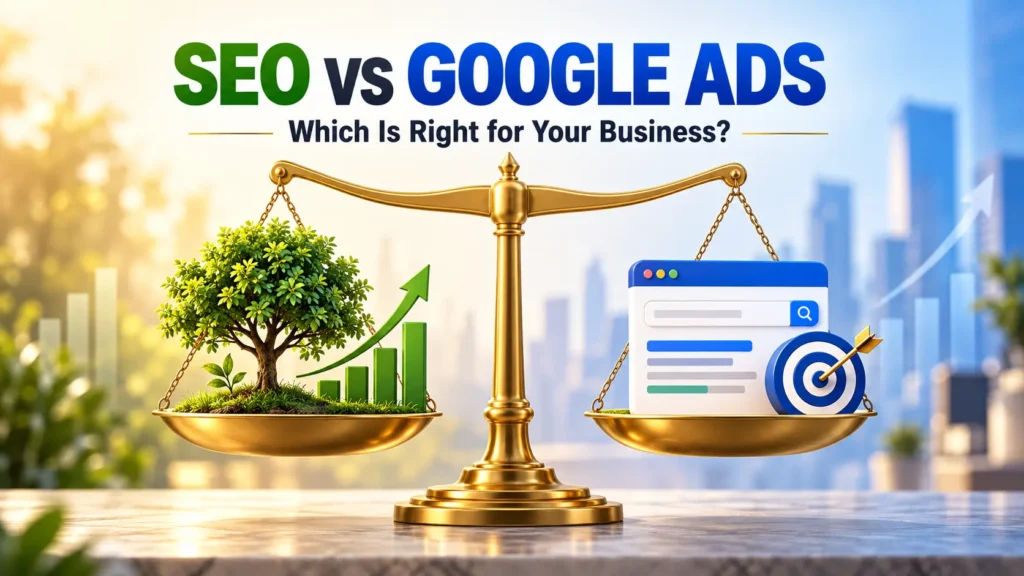
SEO vs Google Ads is not simply a choice between free and paid marketing. Search engine optimisation improves your website, content, and technical structure so search engines can understand and rank it organically. Google Ads places your business within sponsored search results when you target relevant searches. Each approach can support growth, but its value appears differently.
With SEO vs Google Ads, SEO generally takes longer to show measurable results. You need useful content, technical improvements, trustworthy links, and a consistent optimisation process. However, once pages begin ranking, they can attract relevant visitors without paying for every click. This makes SEO especially valuable for businesses looking to build durable online authority and steady traffic.
Google Ads offers speed in the SEO vs Google Ads comparison. Campaigns can start generating traffic almost immediately after approval, making them useful for product launches, events, seasonal offers, or urgent lead generation. Moreover, you can target specific locations, devices, search terms, and audiences. The challenge is that traffic usually stops when the advertising budget stops.
Read more: https://mynkmedia.com/brand-attention-vs-business-growth/
Cost is another important difference in SEO vs Google Ads. SEO requires investment in strategy, content, website improvements, and professional support, but there is no direct cost per organic click. Google Ads uses a pay-per-click model, so your spending rises as people click your ad. Consequently, competitive industries may require substantial budgets to maintain visibility.
Control is where SEO vs Google Ads produces another contrast. Ads allow you to choose exact messages, landing pages, budgets, targeting, and campaign timings. SEO gives less immediate control because rankings depend on Google’s evaluation and changing competition. Nevertheless, optimised pages can continue attracting searches for months or years, creating a valuable business asset.
Your customer journey should influence the SEO vs Google Ads decision. If people need time to research before buying, informative SEO blogs, guides, and comparison pages can build trust early. For high-intent searches such as “book a consultation today,” paid ads may convert faster. Meanwhile, both channels can guide customers at different decision stages.
For many businesses, SEO vs Google Ads works best as a combined strategy rather than an either-or choice. Use Google Ads to test keywords, offers, and landing pages quickly. Then use SEO to develop long-term content around successful search terms. Likewise, use organic data to improve advertising messages and reduce wasted paid spend.
Before choosing SEO vs Google Ads, review your current website, average sale value, sales cycle, and available budget. A slow website or unclear offer can weaken results from either channel. In addition, study the search behaviour of your ideal customers. This helps you decide whether immediate promotion or long-term content should receive priority first.
Measuring return on investment matters throughout SEO vs Google Ads. Track qualified leads, sales, conversion rate, cost per lead, organic impressions, and revenue rather than clicks alone. A campaign that brings less traffic but stronger customers can still be more profitable. Regular reporting helps you allocate money to the channel delivering the most meaningful outcomes.
The best choice in SEO vs Google Ads depends on what your business needs now and what it wants to achieve later. Choose Ads when you need fast, controllable results and have room for ongoing spend. Choose SEO for sustainable visibility and compounding value. Above all, invest with clear goals, track performance, and review results regularly.