
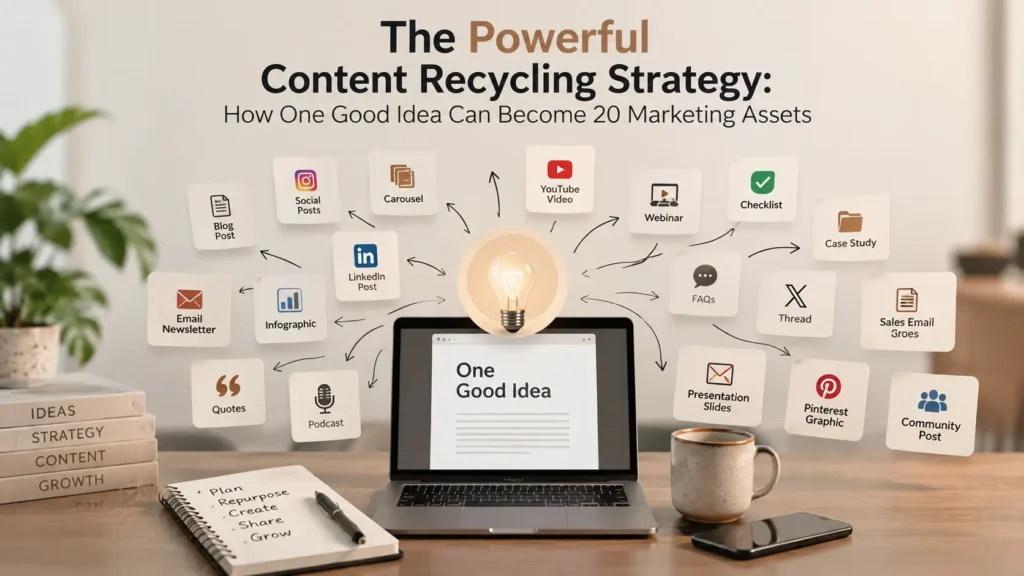
A single strong idea can do far more than fill one post. A Content Recycling Strategy turns an original insight into multiple useful formats without forcing your team to invent something new every day. Firstly, the goal is not to copy and paste the same message everywhere. It is to preserve the central idea while changing the format, angle, length, or platform. Buffer describes content repurposing as adapting the core of existing content for other channels in its content repurposing guide. Buffer’s content repurposing guide. This approach helps marketing teams extend the useful life of ideas while maintaining a consistent message across more channels.
Start With One Strong Source Asset
A practical Content Recycling Strategy starts with one substantial source asset. That could be a blog, podcast, webinar, customer interview, research report, founder video, or case study. However, the best source material usually contains several smaller ideas inside it. A 1,500-word article may include statistics, examples, opinions, questions, mistakes, tips, and quotes that can each become separate content. Instead of treating the original piece as finished once it is published, marketers can view it as a content library. One well-developed source gives the team enough material to create fresh communication without weakening the original message or starting from zero.
Turn One Idea Into 20 Assets
For example, a Content Recycling Strategy can turn one blog into a LinkedIn post, Instagram carousel, short Reel, email newsletter, infographic, FAQ, quote graphic, X thread, Pinterest graphic, sales email, webinar topic, podcast discussion, YouTube Short, downloadable checklist, presentation slide, case-study snippet, website FAQ, founder post, community answer, and follow-up blog. Moreover, each asset can highlight a different part of the original idea. Buffer recommends building repurposing into the content workflow rather than treating it as an afterthought. Its repurposing framework also shows how existing ideas can continue reaching audiences who missed the first version with less creative pressure overall.
Adapt Content Instead of Copying It
The strongest Content Recycling Strategy adapts content to the platform instead of simply duplicating it. Therefore, a detailed blog should not become a giant Instagram caption, and a webinar clip should not be posted without considering pacing or context. LinkedIn may need a professional observation, while Instagram may benefit from visual storytelling. Email can provide a more personal explanation, whereas a short video needs an immediate hook. The core message stays consistent, but the delivery changes. This makes recycled content feel intentional rather than repetitive and allows one idea to match the way people naturally consume information on different channels.
Focus on Quality, Not Just Quantity
Quality should remain central to every Content Recycling Strategy. Additionally, producing twenty assets does not mean every asset needs to be created at once or published on every available platform. Choose formats based on where your audience spends time and how each channel supports your marketing goals. Google recommends creating people-first content that genuinely helps an intended audience rather than producing material primarily to manipulate rankings. Read Google’s people-first content guidance. That principle also applies to recycled content. Each adaptation should add clarity, convenience, context, or a useful perspective. If an asset contributes nothing new to the audience experience, it may not deserve publication today.
Read more: https://mynkmedia.com/social-media-strategy-for-a-small-business/
Plan for Recycling From the Beginning
A Content Recycling Strategy also becomes easier when marketers create with repurposing in mind from the beginning. Meanwhile, writers can structure blogs around sections, video teams can record clips, designers can build reusable templates, and subject-matter experts can capture explanations during longer sessions. These choices make future adaptations faster because components already exist. A webinar, for instance, can be planned with short clips, quotes, slides, and audience questions in mind. Instead of searching through old material later, the team develops assets intentionally. This reduces production friction and gives every major content investment more opportunities to support future campaigns and conversations.
Measure What Performs Best
Measurement is essential because a Content Recycling Strategy should improve based on audience behaviour. Consequently, marketers should track which angles, formats, hooks, and channels generate outcomes such as saves, qualified visits, enquiries, watch time, email clicks, or conversions. A topic that performs well as a blog may also succeed as a carousel but fail as a video. That does not mean the original idea is weak; it may indicate that the format or execution needs adjustment. Performance data helps teams decide which assets deserve variations, which channels deserve attention, and which ideas should become larger campaigns rather than isolated posts.
Make Every Good Idea Work Harder
Ultimately, a Content Recycling Strategy allows brands to get more value from the thinking they have already done. The advantage isn’t producing twenty pieces from one idea; it is building a connected system where every asset reinforces a useful message in a format suited to its audience. Start with one strong idea, identify its insights, assign each insight to a channel, and adapt the delivery while keeping its meaning. Over time, this approach can make content planning more sustainable, strengthen message consistency, and reduce the pressure to constantly chase new topics to keep a marketing calendar full.