Social Media Strategy for a Small Business
In 2026, posting randomly is unlikely to produce dependable growth. A Social Media Strategy for a Small Business should connect every post to an audience need and commercial objective. Firstly, decide whether your priority is awareness, enquiries, website visits, repeat purchases, or community loyalty. Choose one primary outcome for each campaign, then establish a realistic budget, weekly time commitment, and approval process. This foundation prevents attractive content from becoming disconnected from measurable, sustainable business progress. A well-planned Social Media Strategy for a Small Business helps turn limited time and resources into consistent marketing activity. Instead of trying to be active on every platform, businesses can focus on the channels, content, and audiences that are most relevant to their goals.
Understanding your audience is essential before selecting platforms or formats. However, a strong social media strategy begins with customer evidence rather than assumptions. Review sales conversations, frequently asked questions, website searches, and competitor comments to identify genuine interests and objections. A small business can supplement this research with Pew Research Center’s social media data and platform insights. Document audience age, location, challenges, motivations, preferred content, and buying triggers in one practical profile before planning campaigns.
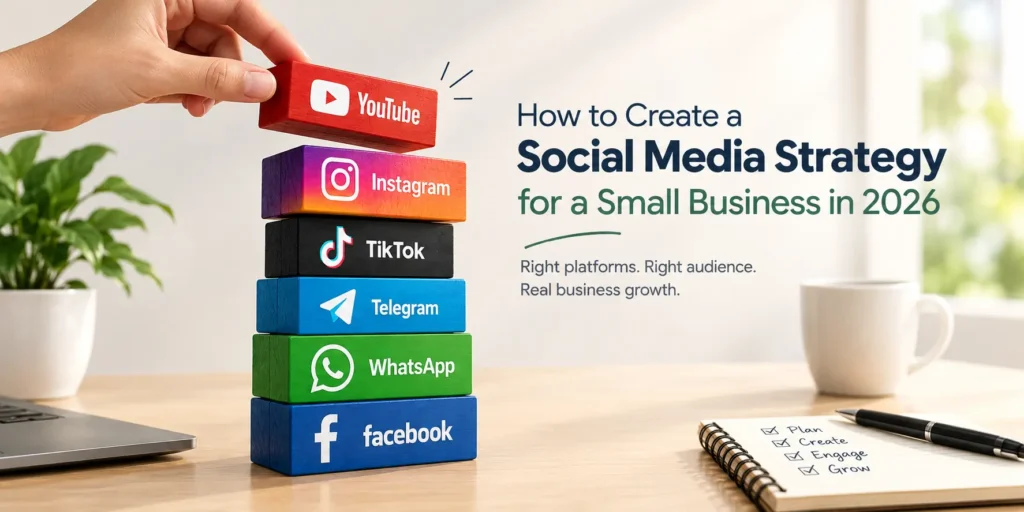
Choose platforms according to customer behaviour, not popularity. Therefore, your Social Media Strategy for a Small Business should prioritise two channels that match your audience and resources. A visual small business may favour Instagram or Pinterest, while a professional service may gain stronger leads through LinkedIn. Explore Google Trends to compare topics, then define each channel’s role before creating distinctive material that serves a clear strategic business purpose.
Read more: https://mynkmedia.com/seo-vs-social-media-marketing-which-is-better/
Set specific targets that connect visibility with business value. Moreover, every Social Media Strategy for a Small Business needs measurable indicators such as qualified enquiries, saves, profile visits, email sign-ups, conversions, or repeat purchases. A small business should record a starting benchmark and choose monthly targets that are ambitious but achievable. Separate leading indicators, including watch time and engagement, from final outcomes such as revenue. This makes reporting more useful and stops follower growth from defining overall campaign success.
Build three to five content pillars around customer needs and brand expertise. For example, a social media strategy could combine education, product proof, customer stories, behind-the-scenes processes, and promotional offers. A small business can turn each pillar into recurring formats, including short videos, carousels, FAQs, polls, and case studies. Maintain a consistent visual identity, message, and call to action for every post.
Create a manageable production and publishing system. Meanwhile, the social media strategy should include a monthly calendar, weekly creation blocks, clear responsibilities, reusable templates, and a simple approval deadline. A small business can batch scripts, photographs, and videos to reduce daily pressure. Use AI for brainstorming, transcription, or variations, but review every output for accuracy and personality. Schedule posts when followers are active, while reserving time for timely reactions, stories, and daily community conversations online.
Treat engagement as customer service, not an afterthought. Additionally, a Social Media Strategy for a Small Business should explain who answers comments and messages, expected response times, escalation rules, and the tone used in difficult conversations. A small business builds trust by responding thoughtfully, acknowledging feedback, and continuing useful discussions. Encourage user-generated content with permission and answer recurring questions publicly. Avoid automated replies that feel impersonal, especially when someone is asking about price, availability, complaints, or purchase decisions directly.
Review performance monthly and adjust the plan quarterly. Consequently, your social media strategy should compare content by reach, retention, engagement, clicks, leads, and sales rather than judging viral posts. Connect campaigns to Google Analytics using tagged links so a small business can identify valuable channels. Ultimately, repeat successful themes, improve weak hooks, stop activities that waste resources, and test one variable at a time. Consistent learning will make the 2026 plan practical, focused, and profitable.