
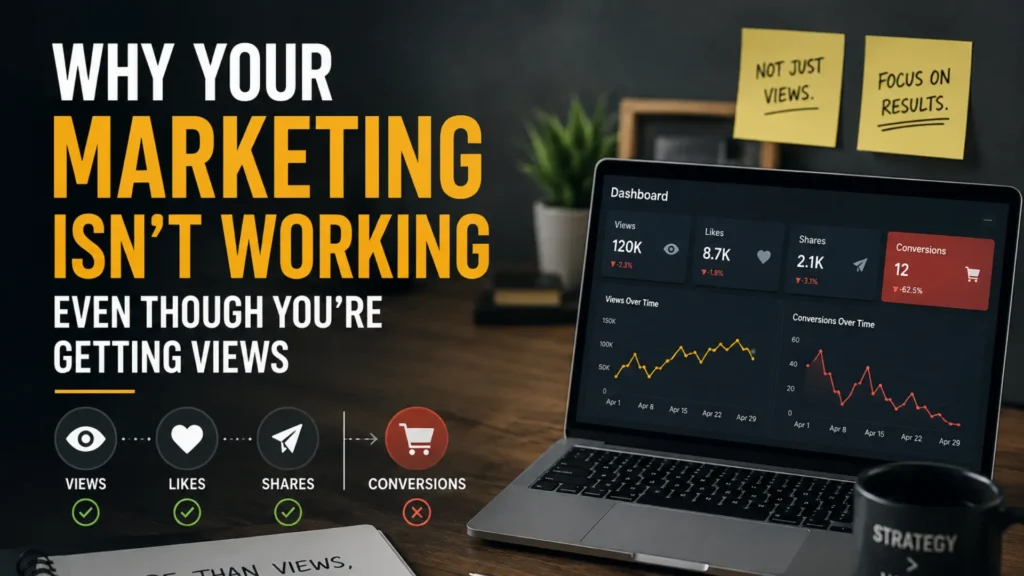
Getting thousands of views can feel like proof that your strategy is successful. However, views only show that people saw your content; they do not reveal whether people noticed, cared, clicked, enquired, or purchased. If you are wondering why your marketing isn’t working despite impressive numbers, look beyond visibility and examine what happens after attention.
Why Your Marketing Isn’t Working Despite Thousands of Views
Audience mismatch is often the main problem. Your content may attract people who enjoy trends, humour, or attractive visuals but have no intention of becoming customers. Reach should not be confused with genuine demand. A smaller audience consisting of people who need your product or service can be more valuable than thousands of viewers with little buying intent. Therefore, define your ideal customer before planning content, advertisements, or promotional campaigns.
Weak Messaging Reduces Marketing Results
People may understand what you post without understanding why your offer matters to them. Your marketing isn’t working when your content focuses only on what you provide instead of explaining the problem you solve. Effective messaging should connect the audience’s challenge with a relevant solution. It must clearly communicate who the offer is for, what benefit it provides, and why someone should choose your business. Most importantly, the next step should be simple and obvious.
Attention Is Not Turning Into Action
Content can receive views, likes, and shares while producing almost no enquiries or sales. In this situation, marketing isn’t working because there is no clear path from interest to action. Every campaign should have one measurable purpose. It may encourage website visits, lead-form submissions, direct messages, consultations, downloads, or purchases. A strong call to action tells people exactly what to do after engaging with your content. Developing a structured social media marketing strategy can help connect content creation with meaningful business goals.
Your Customer Journey Has Gaps
Imagine someone discovers your reel, visits your profile, reaches your website, and then finds confusing information or no convincing reason to contact you. The content may have performed successfully, but the next stage failed. Review your profile, landing pages, website speed, enquiry forms, offers, and calls to action. Each touchpoint should support the promise made in your content and guide potential customers towards the next step.
Read More: https://mynkmedia.com/small-business-marketing-mistakes/
Views Are Creating a False Sense of Success
Views, followers, impressions, and likes are useful for measuring awareness, but they are not enough to evaluate business performance. Your marketing isn’t working effectively if reach is growing while qualified leads, conversion rates, revenue, or customer retention remain unchanged. HubSpot’s guide to digital marketing analytics recommends examining action-focused measurements such as click-through rates, form submissions, and conversions instead of relying only on surface-level engagement.
Poor Tracking Is Hiding Your Results
Without proper attribution, you may not know which campaign, platform, audience, or message produces meaningful results. When marketing isn’t working, incomplete reporting may prevent you from identifying the actual problem. Use campaign tracking and analytics to monitor where visitors originate and what they do afterward. Google Analytics explains how key events and attribution reports can help businesses measure important customer actions and understand the touchpoints contributing to them.
Your Offer May Be the Real Problem
Great content cannot compensate for an unclear, irrelevant, or unconvincing offer. If people engage but hesitate to enquire, examine whether the value is obvious, the pricing feels reasonable, the proof is convincing, and the offer solves an urgent problem. Ultimately, marketing isn’t working when attention is strong, but the audience’s perceived value of the offer remains weak. Testimonials, case studies, clear benefits, guarantees, or demonstrations can help build confidence.
How to Fix Marketing That Isn’t Working
First, identify your ideal customer and define the single outcome each campaign should support. Then, determine where people leave the journey: the content, profile, website, enquiry form, sales conversation, or checkout. Afterward, test one element at a time, such as the audience, hook, message, offer, call to action, or landing page. This approach turns marketing improvement into a structured diagnosis instead of a vague conclusion. Views are not useless; they represent the beginning of the customer journey.
Use them to understand whether your message is attracting attention, then connect that attention to valuable actions. Instead of asking, “How many people saw this?” ask, “What did they do next?” Once you measure the complete journey, marketing isn’t working becomes a problem you can identify, test, and fix.