
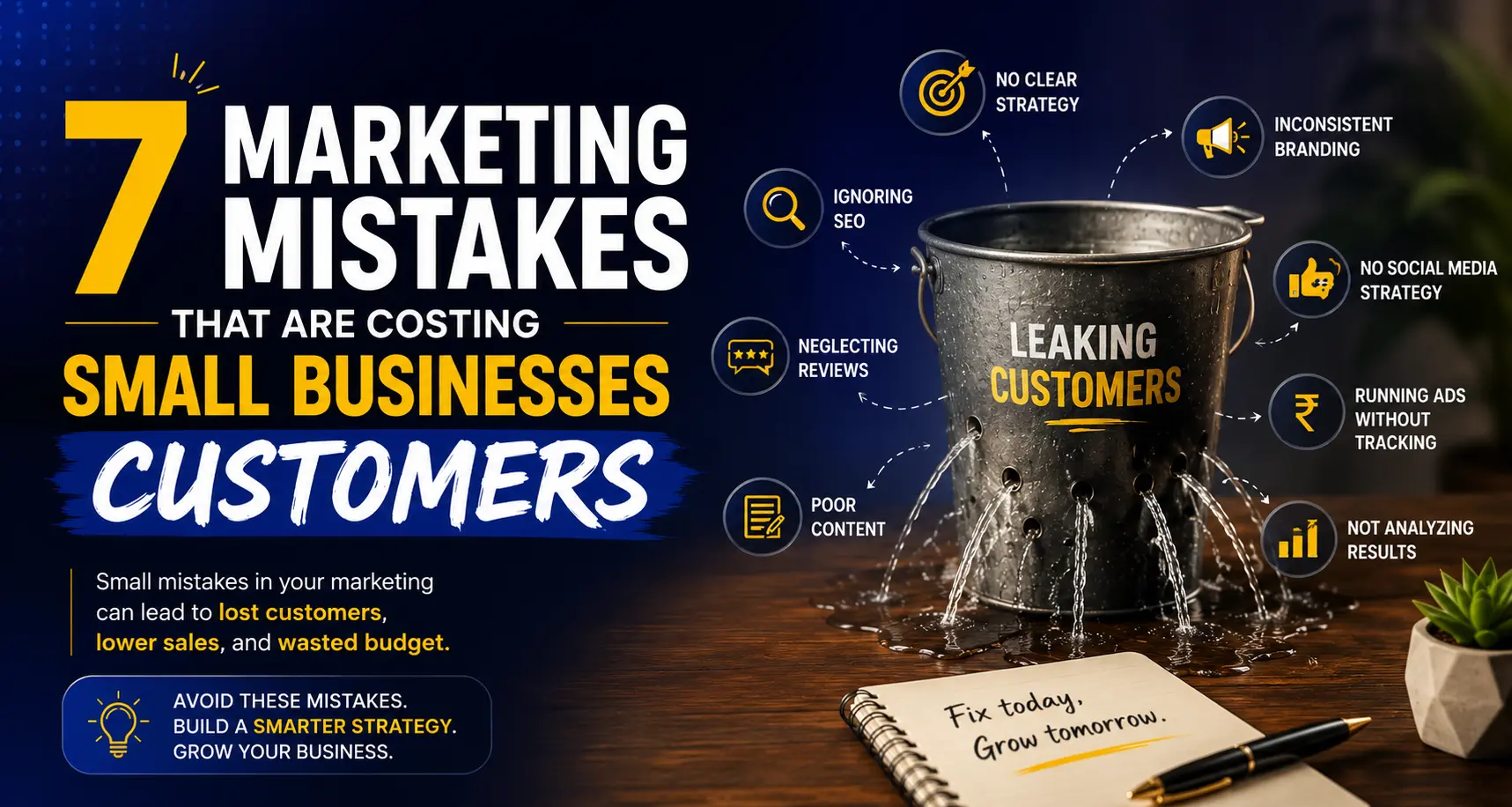
Marketing has become far more than placing an advertisement in front of people. These small business marketing mistakes can reduce visibility, weaken trust, and cost valuable sales. Today, customers discover brands through Google, Maps, websites, social media, reviews, and recommendations. However, small companies often lose leads because their marketing lacks consistency or direction. This guide explains the most common mistakes and practical actions that can turn searches into meaningful enquiries.
1. No Clear Online Presence
A customer should immediately know what a business offers, where it serves, and how to get in touch. Yet many small brands have incomplete websites, outdated contact details, or missing Google Business Profiles a mistake. Consequently, marketing efforts fail before a customer can even enquire. Keep business information consistent across all platforms, add service descriptions, and make messaging or booking easy. Small business marketing mistakes at this stage often cause customers to choose easier-to-find competitors.
2. Ignoring Reviews and Reputation
Online reviews are often the first proof that a business can be trusted. When small brands leave reviews unanswered, they make a marketing mistake, missing a valuable opportunity to show care and professionalism. Moreover, a respectful response to both positive and negative feedback can strengthen credibility. Request reviews after purchases, monitor them regularly, and respond. Avoiding small business marketing mistakes in reputation management helps create stronger customer trust.
3. Posting Without a Social Media Strategy
Social media is not effective simply because a business posts often. Random content is a mistake; it can confuse small audiences and make marketing feel disconnected from real goals. Instead, identify the ideal customer, choose content themes, and plan posts around awareness and trust. Small business marketing mistakes on social media can make even useful content feel inconsistent. Educational tips, behind-the-scenes moments, and customer stories usually work better than constant sales messages.
Also Read: https://mynkmedia.com/zomato-notification-strategy/
4. Selling Rather Than Solving Problems
Customers do not usually follow a business to see promotions. They want helpful answers, inspiration, and solutions that make decisions easier. Therefore, marketing content should address common questions, needs, and concerns before asking for a sale. A small salon can explain hair-care routines, while a local café can share ordering tips or ingredient stories. Useful content makes a business memorable, builds expertise, and avoids mistakes that make an audience feel pressured.
5. Neglecting Local SEO
Local search is essential when customers need a nearby product or service. Unfortunately, many small businesses make marketing mistakes by overlooking location keywords, hours, categories and photos on Google Business Profile. As a result, competitors appear first when customers search nearby. Optimise your profile, collect reviews and ensure your name, address and phone number appear consistently everywhere online. For more guidance, review Google’s Business Profile tips.
6. Running Ads Without Tracking
Paid advertising can grow a business quickly, but only when results are measured. Small teams sometimes spend money on marketing campaigns while judging success only by likes, views, or clicks. However, the key metrics are enquiries, calls, bookings, purchases and cost per lead. Set up conversion tracking, use a simple monthly dashboard and test one change at a time. This discipline exposes costly mistakes, protects the budget and shows which adverts genuinely deliver customers.
7. Common Small Business Marketing Mistakes to Avoid
Customer behaviour, platforms and competitors keep changing, so marketing cannot run on autopilot. Every small business should review its results at least monthly and ask what content, channels and offers create enquiries. Additionally, compare performance with previous periods, then refine weak areas instead of repeating the same mistakes. A regular review keeps decisions based on evidence, not assumptions. It also lets a business invest time and money in tactics that continue to support sustainable growth. Fixing small business marketing mistakes allows every marketing activity to support real business growth.
The most damaging marketing mistakes are rarely caused by a limited budget; they usually come from unclear priorities. Small business owners can make steady progress by improving their online presence, reputation, content, local visibility, advertising tracking, and monthly review process. By avoiding small business marketing mistakes, brands can create a stronger and more measurable growth strategy. Most importantly, every activity should make it easier for customers to find, understand, and trust the brand. With a focused strategy, marketing becomes an ongoing system for creating stronger relationships, better leads, and long-term growth. It turns a limited budget into a clear, measurable path to better customer acquisition.