Understanding the Difference
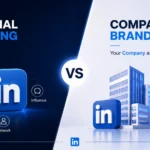
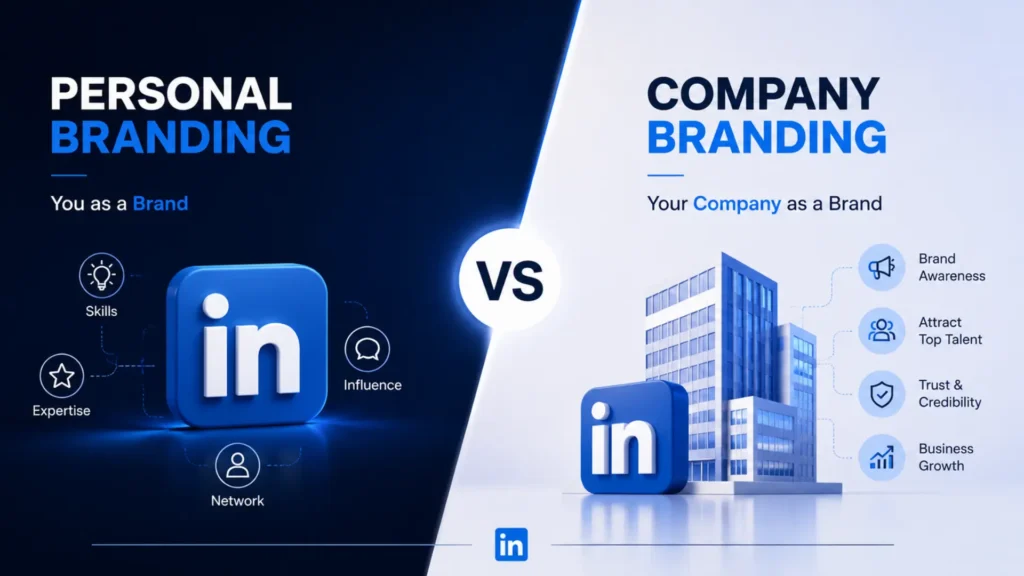
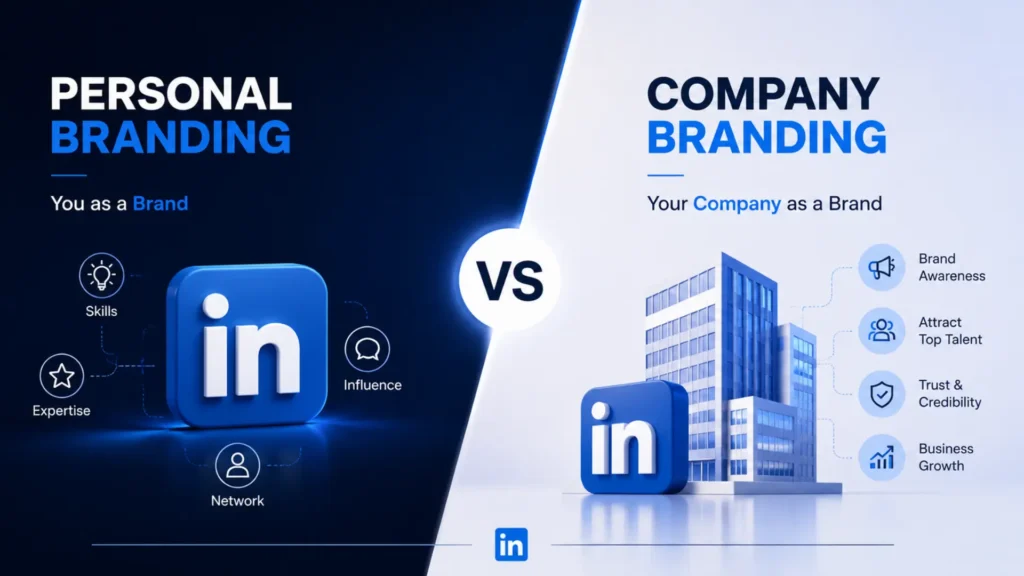
On LinkedIn, people and organisations communicate through different identities. A personal profile presents an individual’s experience, expertise, opinions, and professional journey, while a Company Page represents a business, its services, culture, achievements, and opportunities. LinkedIn’s official guidance confirms that profiles represent individuals and Pages represent organisations. A complete LinkedIn branding strategy recognises this distinction and assigns each channel a clear role. People create connection; the company creates a destination for learning more about the business.
Personal profiles are stronger at starting conversations because audiences can see who is speaking. Founders can share lessons, employees can explain how projects are completed, and specialists can offer industry advice. This makes a LinkedIn branding strategy feel human instead of promotional. However, personal branding should not become self-promotion without value. The most effective posts teach, challenge an assumption, explain a decision, or share an honest experience that helps the reader understand a business issue.
How Personal Branding Builds Trust
Thought leadership gives personal content a purpose. It includes informed opinions, observations, useful frameworks, and lessons drawn from work. In research discussed by Edelman, 73% of decision-makers said thought leadership was a more trustworthy basis for assessing an organisation’s capabilities than marketing materials or product sheets. Therefore, a LinkedIn branding strategy supported by credible experts can influence how potential clients judge the company before they ever speak with its sales team or examine a proposal.
Read more: https://mynkmedia.com/spotify-personalization-listener-experience/
The Role of Company Branding
Company branding performs an equally necessary function. A Page gives prospects one place to review services, milestones, client results, workplace culture, vacancies, and business updates. Moreover, it protects consistency by keeping the logo, description, positioning, and information accurate. A LinkedIn branding strategy needs this official presence because personal profiles may introduce the company, but the Page validates that introduction and helps visitors understand what the organisation offers, whom it serves, and why its work matters.
The content through each identity should complement rather than duplicate the other. Leaders might explain why the company made a choice, while the Page announces the resulting launch. Employees might share a lesson, while the Page presents the case study. Consequently, a LinkedIn branding strategy becomes more interesting when the same story is told from different perspectives. Reposting identical captions everywhere weakens impact because audiences have little reason to follow both the people and the organisation.
Creating a Coordinated Content Plan
Consistency matters, although consistency does not mean posting daily. A plan could include weekly insights from experts, regular employee stories, and company updates supported by proof. Meanwhile, comments from leaders can extend visibility by adding responses to industry discussions. Every part of the LinkedIn branding strategy should reflect shared themes, language, and expertise. Clear approval guidelines can help employees participate confidently without making their posts sound scripted, controlled, or disconnected from their own experience.
Measurement should reflect the purpose of each channel. For personal profiles, track profile views, comments, connection requests, enquiries, and invitations to collaborate. For the Company Page, monitor follower quality, clicks, engagement, job interest, website traffic, and leads. Additionally, evaluate whether prospects mention posts during sales conversations. A LinkedIn branding strategy is working when attention develops into trust and action, not when impressions rise. Review results monthly and improve topics, formats, timing, and calls to action.
Why Businesses Need Both
Ultimately, businesses do not need to choose between personal branding and company branding. Personal voices build familiarity, demonstrate knowledge, and make the organisation relatable; the Company Page provides clarity, continuity, and proof. The LinkedIn branding strategy connects both sides through a positioning message and a content plan. For example, begin with one expert voice, three recurring educational themes, and an updated Page. Together, these assets can strengthen awareness, engagement, lead generation, recruitment, and long-term relationships.